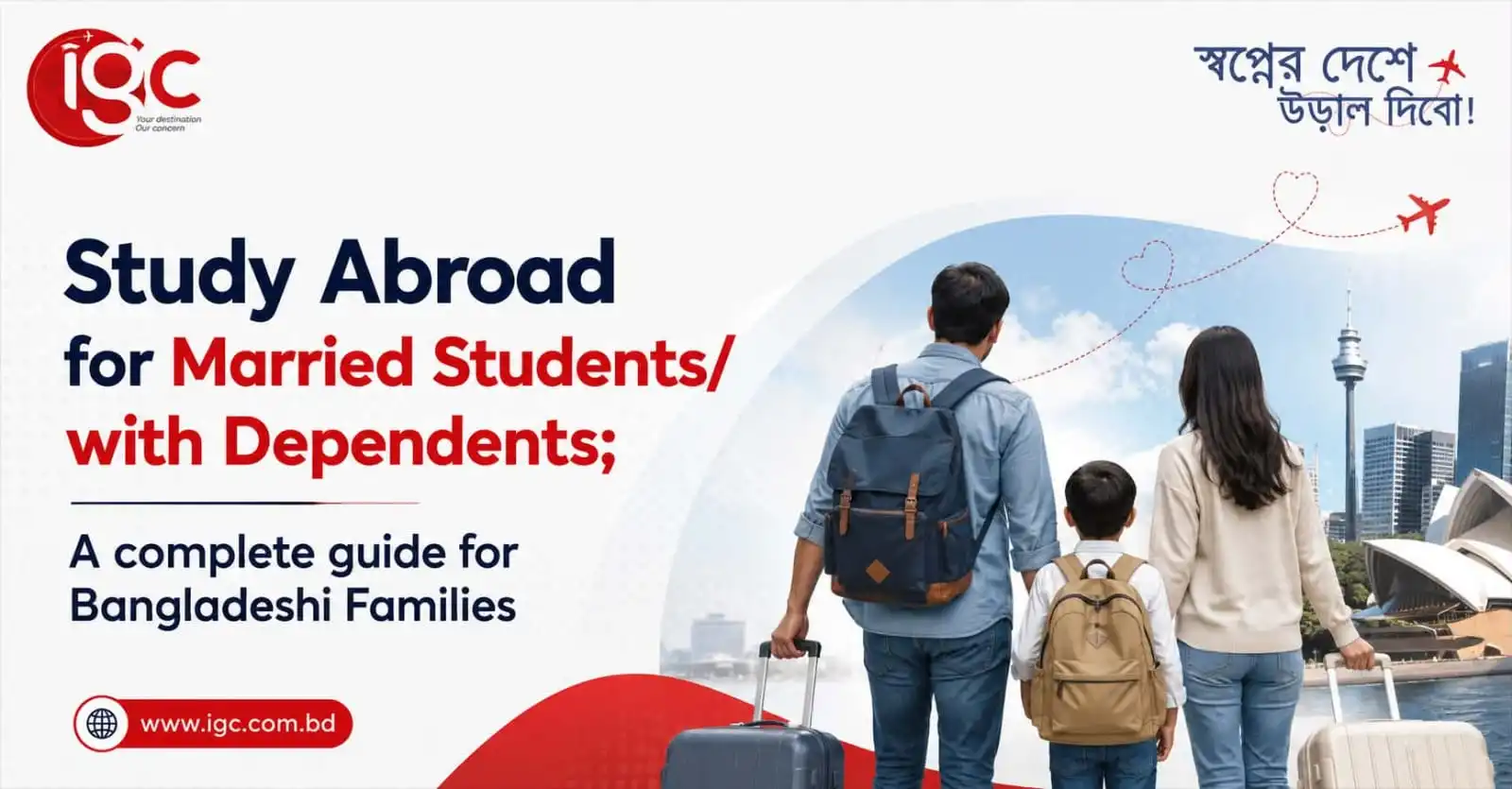
Study Abroad for Married Students / with Dependents: A Complete Guide for Bangladeshi Families
Study Abroad for Married Students / with Dependents is not only an educational decision. It is a major family decision involving money, marriage, children, housing, employment, healthcare, emotional support, and long-term career plans. A single student may tolerate a small room, irregular meals, and a limited monthly budget. A married student with a husband, wife, or child must think much more carefully. The success of the plan depends not only on university admission but also on whether the whole family can live safely and legally in the chosen country.
For Bangladeshi students, this issue is especially important. Many students begin planning overseas education after marriage. Some have small children. Others support parents in Bangladesh while paying tuition fees and living expenses abroad. They may also hope that their spouse can work and help manage family costs. However, dependent visa rules are not the same in every country. Some countries allow spouses to work. Some limit working hours. Some allow dependents only for research students or students in selected programs.
Therefore, Study Abroad for Married Students / with Dependents requires research beyond university rankings. A family must compare visa rules, tuition fees, rent, childcare, health insurance, school costs, spouse employment rights, and post-study opportunities. A country that looks affordable for one student may become very expensive for a family of three.
This article explains the issue from the viewpoint of Bangladeshi families. It discusses practical challenges, country choices, financial preparation, documentation, emotional adjustment, and common mistakes. It also uses realistic stories to show that success is possible when the family makes decisions based on evidence rather than hope.
Why Studying Abroad with a Family Is a Different Journey
A married student carries two responsibilities at the same time. The student must perform well academically while remaining present as a husband, wife, or parent. These responsibilities can support each other, but they can also create pressure.
For example, imagine Rahim, a civil engineer from Chattogram. He received admission to a master’s program overseas. His first budget included tuition, a shared room, food, and transportation. Later, he decided to take his wife and three-year-old daughter. His expected monthly cost almost doubled because he needed a private apartment, family health coverage, childcare, and a larger food budget.
Rahim’s mistake was not choosing to travel with his family. His mistake was preparing an individual student budget for a family journey.
Study Abroad for Married Students / with Dependents should therefore begin with several questions:
- Can dependents accompany the student under the current immigration rules?
- Can the spouse work legally?
- Will the child receive access to public education?
- Is childcare affordable?
- How much money must be shown for the visa?
- Does the family have savings for at least six months?
- What will happen if the spouse does not find work quickly?
- Can the student manage academic work and family responsibilities together?
These questions may feel uncomfortable. However, answering them early can prevent serious financial and emotional problems later.
Who Is Usually Considered a Dependent?
The meaning of a dependent differs between immigration systems. In most cases, it may include:
- A legally married husband or wife
- A recognised common-law or long-term partner
- An unmarried child below a specified age
- In limited situations, a child who remains dependent because of a disability
Parents, brothers, sisters, and other relatives are generally not treated as student dependents.
For Bangladeshi applicants, a legally registered marriage certificate is normally the strongest proof of marriage. Only holding a religious ceremony without proper civil registration may create difficulties. Applicants may also need translated and certified copies of Bangla documents.
A visa authority can ask for evidence that the relationship is genuine. This evidence may include wedding photographs, family photographs, communication records, joint financial information, travel history, invitations, or proof that the couple has lived together.
The purpose is not to judge whether a wedding was simple or expensive. The authority wants to confirm that the relationship was not created only to obtain immigration benefits.
Current Dependent Policies Require Careful Comparison
International student policies have changed significantly in recent years. Families should never depend on old Facebook posts, outdated videos, or information from a friend who travelled several years ago.
United Kingdom
The United Kingdom has become more restrictive for student dependents. Most international students beginning regular taught master’s or undergraduate programs cannot bring dependents through the student route. Dependents are generally permitted when the main student is studying an eligible postgraduate research program, such as a PhD or another research-based higher degree, or when the student is sponsored under certain government scholarship arrangements.
Official statistics show the effect of this change. In the year ending March 2026, the UK granted 18,382 sponsored study visas to dependents. The number remained far below the levels seen before the January 2024 restriction.
This means a Bangladeshi student should not assume that admission to a one-year taught master’s program will allow a spouse or child to travel as a dependent.
Canada
Canada still provides options for some spouses of international students, but eligibility is no longer equally available for every course. Spouses or common-law partners of students in selected academic programs may qualify for an open work permit. The exact eligibility depends on the main student’s institution, program type, and level of study.
A Bangladeshi family should check the current conditions for the specific course before paying tuition. It is risky to select a short diploma only because an agency says the spouse will automatically receive an open work permit.
Australia
Australia allows students to include eligible family members in a student visa application or arrange for them to join later. However, work conditions apply. In general, family members cannot begin working before the main student’s course starts. Many dependents are limited to 48 hours of work per fortnight, although different rights may apply when the main student is studying a master’s degree by research or a doctoral degree.
The family must also consider high rent, health insurance, childcare expenses, and proof of financial ability.
Germany
Germany may allow a spouse and minor children to join an international student through family reunification procedures. The family may need to demonstrate sufficient financial resources, suitable accommodation, health coverage, and a genuine family relationship. The child usually needs to be unmarried and under 18.
Germany can offer lower tuition at many public universities, but language barriers and housing shortages can create practical difficulties.
Choosing the Right Country for Your Family
There is no single best country for all married students. The right country depends on the family’s academic goals, income, number of children, career background, language ability, and level of financial risk.
Study Abroad for Married Students / with Dependents becomes safer when the country is selected through a family suitability test.
Academic Suitability
The course must have a clear connection with the student’s previous education or career. A visa officer may question an unrelated program, especially when the applicant is taking a spouse and children.
A Bangladeshi bank officer applying for an advanced degree in finance has a logical academic pathway. The same applicant choosing an unrelated basic certificate without explanation may face questions about the real purpose of travel.
Dependent Eligibility
Check whether the exact course permits dependents. Do not check only the country. The program level, duration, institution, funding type, and research status may affect eligibility.
Spouse Work Rights
Spouse work rights can make a country attractive, but they should not be treated as guaranteed income. Permission to work does not mean immediate employment.
The spouse may need local experience, professional registration, language skills, a driving licence, childcare arrangements, or additional certification. A doctor, lawyer, teacher, pharmacist, or engineer may not be able to enter the same profession immediately.
Child-Friendly Environment
Parents should examine school admission, childcare availability, medical services, family housing, public transportation, weather, and community safety.
Free or low-cost public schooling can reduce expenses, but preschool and daycare may remain costly. Rules may also differ between provinces, states, cities, and visa categories.
Long-Term Career Value
A cheap program is not always a wise program. Families should consider whether the qualification has value in Bangladesh and internationally.
Ask whether the course:
- Builds specialised skills
- Supports professional registration
- Offers practical training
- Has strong graduate employment outcomes
- Fits the student’s long-term career
- Provides realistic post-study options
Financial Planning for Married Bangladeshi Students
Financial preparation is often the most difficult part of Study Abroad for Married Students / with Dependents.
Bangladeshi families may sell land, use fixed deposits, borrow from relatives, or depend on several sponsors. These methods are not automatically unacceptable, but every major transaction must have a clear and believable source.
Build a Family Budget, Not a Student Budget
Your first-year calculation should include:
- Tuition fees
- Student visa and dependent visa fees
- Health insurance
- Air tickets for all family members
- House deposit and advance rent
- Furniture and household items
- Food and clothing
- Local transportation
- Childcare or school-related costs
- Mobile phone and internet
- Medical expenses
- Winter clothing
- Emergency savings
- Currency exchange changes
Suppose the main student receives admission with an annual tuition fee equal to BDT 20 lakh. The family may focus only on arranging that amount. However, rent, insurance, flights, visa costs, food, and childcare may require another large amount.
A strong financial plan must survive even when the spouse remains unemployed for six months.
Avoid Depending on Future Part-Time Income
Part-time work should be treated as additional support, not as the main funding source. Job availability can change. A new arrival may need several months to find work.
Students also have academic duties. Excessive working hours can damage attendance, grades, health, and visa compliance.
Explain Every Large Bank Transaction
A sudden deposit made shortly before the visa application can create suspicion. Applicants should retain supporting records, such as:
- Salary statements
- Business documents
- Tax records
- Property sale documents
- Fixed deposit history
- Savings certificates
- Loan approval papers
- Sponsor income evidence
- Gift deeds where appropriate
The financial story must be easy to understand. A complicated arrangement involving several unexplained sponsors can weaken the application.
A Realistic Story of a Bangladeshi Family
Consider the hypothetical story of Nusrat and Arif from Dhaka.
Nusrat worked as a university lecturer and received an offer for a research-based postgraduate degree. Arif worked in digital marketing. They had a five-year-old son.
At first, they planned to apply together immediately. However, their savings were not enough for tuition, family rent, insurance, and emergency costs. Instead of borrowing a large informal amount, they created a twelve-month preparation plan.
Nusrat applied for scholarships and reduced her program choices to universities with strong research funding. Arif completed professional training and built a portfolio that could help him find remote or local work. They registered and translated their marriage certificate, collected their son’s vaccination and school records, and maintained their funds in a clear banking trail.
They also attended online housing sessions offered by the university. They learned that family accommodation near the campus had a long waiting list. Therefore, they applied for housing before the visa decision.
After travelling, Arif did not find a suitable job during the first two months. Because they had emergency savings, the family remained stable. Their son entered a local school and initially struggled with the accent. Nusrat spoke with his teacher and arranged regular reading practice at home.
The family succeeded not because every stage was easy. They succeeded because they planned for delays, uncertainty, and emotional adjustment.
Essential Documents for the Main Student and Dependents
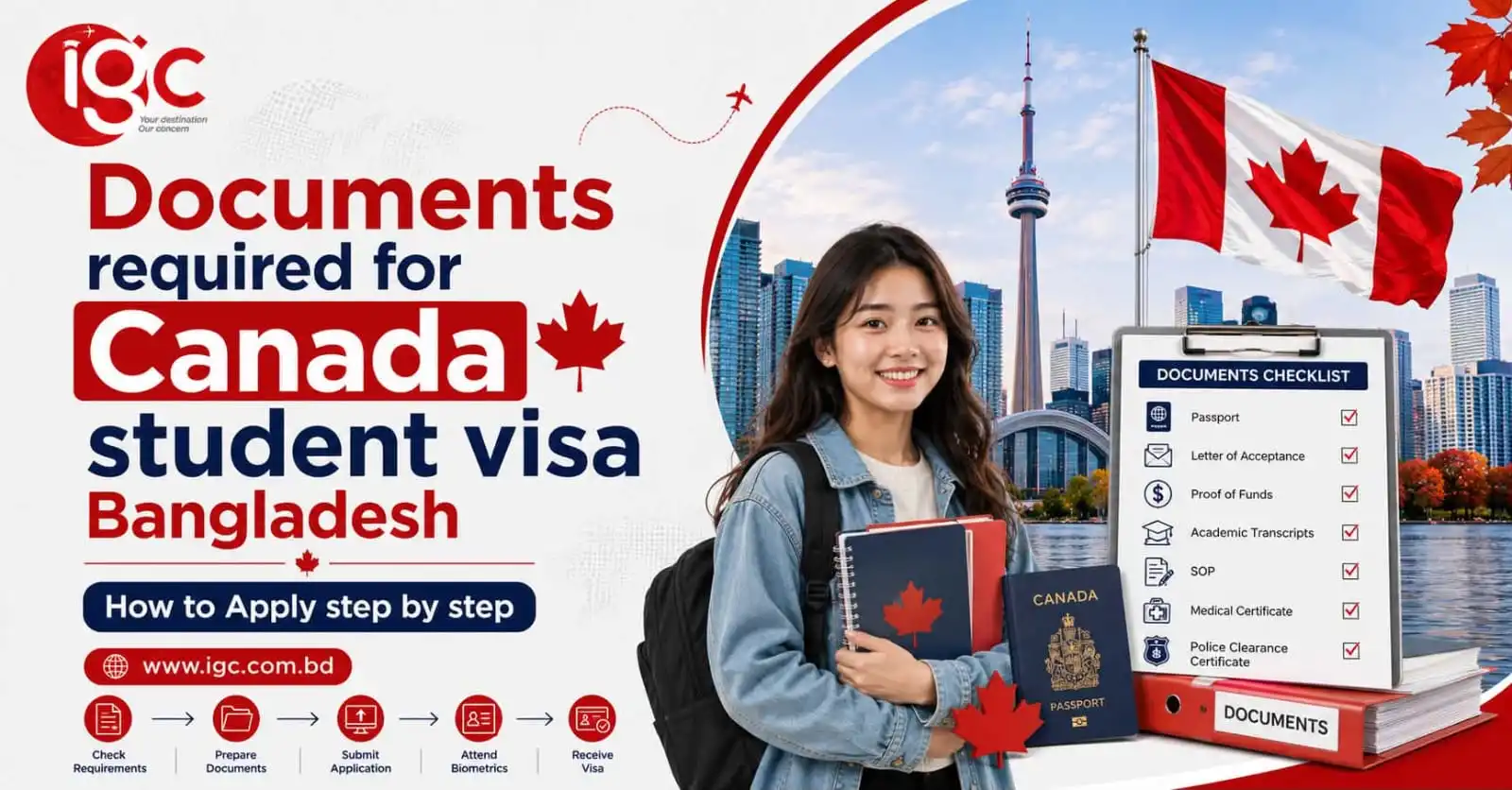
The exact document list depends on the country, but a family may need:
- Valid passports
- University admission documents
- Academic certificates and transcripts
- Student visa forms
- Marriage certificate
- Birth certificates of children
- Evidence of a genuine relationship
- Bank statements
- Sponsor documents
- Source-of-funds evidence
- Health insurance
- Medical examination reports
- Police clearance certificates
- Accommodation information
- Child custody documents where relevant
- Consent from a non-accompanying parent where required
- Certified translations
- Previous visa and travel records
Names, dates of birth, passport details, marriage dates, addresses, and financial figures must remain consistent across all forms.
A minor spelling difference may be explainable, but repeated inconsistencies can reduce trust. Bangladeshi names are sometimes written differently in passports, national identity documents, certificates, and marriage records. Correct these issues early where possible and provide a formal explanation when correction is not possible.
Should the Student Travel First?
Some families apply together. Others allow the student to travel first and bring dependents later. Both approaches have advantages.
Travelling together may reduce emotional separation. The family can begin adapting at the same time. However, it also creates higher immediate costs and housing pressure.
Travelling alone first may allow the student to:
- Complete enrolment
- Understand the city
- Find suitable family housing
- Open a bank account
- Learn the transport system
- Confirm school or childcare arrangements
- Prepare for the family’s arrival
However, later applications can involve additional paperwork, costs, processing time, and emotional stress. The student must also declare family members correctly from the beginning where required. Hiding a spouse or child can create serious immigration problems.
Housing Challenges for Families
Many university residences are designed for single students. A married couple or family may need private accommodation.
Landlords may request advance rent, a deposit, proof of income, references, or a local guarantor. New international students often have none of these.
Begin searching early and confirm:
- Whether children are allowed
- Whether utility bills are included
- Distance from campus
- Distance from schools
- Public transport access
- Heating costs
- Furniture availability
- Deposit rules
- Minimum contract period
- Safety of the area
Never send money to an unknown person without verifying the property and agreement. Housing scams often target international students who are under pressure.
Childcare, Schooling, and Parenting
A parent cannot plan overseas education without planning the child’s daily life.
School-age children may receive access to public schooling, depending on local rules and immigration status. Parents may need proof of address, birth records, vaccination records, previous school reports, and translated documents.
Childcare for younger children is often more difficult. Daycare can be costly and may have a long waiting list. If the spouse plans to work, childcare costs must be compared with expected earnings.
For example, if a spouse earns a modest monthly salary but most of it is spent on daycare and transport, immediate full-time employment may not improve the family’s financial position.
Parents should also prepare children emotionally. A child may experience:
- Language difficulty
- Loneliness
- Different food
- Cold weather
- Changes in school culture
- Separation from grandparents
- Fear of speaking in class
- Difficulty making friends
Regular conversations, familiar meals, video calls with relatives, and involvement in local activities can help.
Cultural and Emotional Challenges
Bangladeshi families often come from strong social networks. Grandparents, siblings, neighbours, and domestic support may be available at home. Overseas, the couple may have to manage cooking, cleaning, childcare, studies, and employment without assistance.
This can create conflict.
The student may feel that academic pressure is not understood. The spouse may feel isolated or financially dependent. A child may demand more attention during examinations.
Before travelling, couples should discuss:
- Division of household duties
- Childcare schedules
- Spending limits
- Study time
- Work expectations
- Communication during stress
- Religious and cultural practices
- Visits to Bangladesh
- Support for parents at home
A fair division of responsibilities is essential. The spouse is not only a visa dependent. He or she is a partner making a major sacrifice for the student’s education.
Common Mistakes to Avoid
Study Abroad for Married Students / with Dependents can become difficult when families make decisions based on incomplete information.
Common mistakes include:
- Assuming that every spouse can work
- Choosing a program only for immigration benefits
- Using outdated dependent visa information
- Showing borrowed money without explanation
- Ignoring childcare costs
- Arriving without confirmed housing
- Expecting immediate professional employment
- Submitting inconsistent relationship documents
- Hiding a previous visa refusal
- Depending completely on part-time work
- Taking an academically weak or unrelated course
- Failing to keep emergency savings
- Trusting verbal promises from an agent
A professional consultant may help with organisation, but the applicant remains responsible for the truth and accuracy of the application.
How to Build a Strong Family Study Plan
A strong plan can be developed through the following stages.
Stage One: Define the Academic Purpose
Explain why the course is necessary, why it is suitable now, and how it connects with your career.
Stage Two: Confirm Dependent Rules
Check official immigration requirements for the exact program and visa category.
Stage Three: Calculate Total Family Costs
Prepare realistic low, normal, and high-cost budgets.
Stage Four: Organise Documents
Correct name differences, translate records, and maintain a clear financial trail.
Stage Five: Prepare the Spouse
The spouse can improve language, technical, digital, communication, or professional skills before departure.
Stage Six: Plan for the Child
Collect medical and educational records and research school or childcare arrangements.
Stage Seven: Create an Emergency Plan
Decide what the family will do if the visa is delayed, the spouse cannot work, housing becomes expensive, or a family member becomes ill.
Is Studying Abroad with Dependents Worth It?
The answer depends on the quality of the plan.
For some students, family presence provides emotional strength. A supportive spouse can help the student remain focused and mentally stable. Children can also benefit from international exposure, a new education system, and wider cultural experience.
For others, travelling together may create financial pressure that damages the academic goal. Temporary separation may be more practical when money is limited or dependent eligibility is uncertain.
Study Abroad for Married Students / with Dependents should not be presented as either easy or impossible. It is a serious project requiring shared responsibility, realistic money, correct documentation, and emotional maturity.
The best decision is not always the most popular decision. It is the decision that protects the education, dignity, and stability of the whole family.
Frequently Asked Questions
1. Can I take my spouse with me when I study abroad?
- You may be able to take your spouse, but permission depends on the destination and your program.
- Some countries allow dependents for many higher education students.
- Others limit dependents to research, doctoral, or government-sponsored students.
- A university admission letter alone does not guarantee dependent eligibility.
- Check the rules for your exact course and visa category.
- Complete this check before paying a large, non-refundable tuition deposit.
2. Can my spouse work full-time as my dependent?
- Spouse work rights differ between countries and visa categories.
- Some dependent spouses may receive open or unrestricted work permission.
- Others may face limits on working hours or occupation types.
- Permission to work does not guarantee that a job will be available.
- Professional careers may require local licences, examinations, or language skills.
- Your budget should remain safe even without immediate spouse income.
3. Which country is best for married Bangladeshi students?
- There is no single best destination for every married student.
- Canada, Australia, Germany, and some European countries may offer family options.
- The United Kingdom now limits student dependents mainly to eligible research and sponsored students.
- The right destination depends on your course, finances, family size, and career plan.
- Compare tuition, housing, work rights, healthcare, and childcare together.
- Choose the country where the complete family plan is realistic.
4. How much money should a married student prepare?
- The required amount depends on the country, city, tuition fee, and number of dependents.
- You must prepare more than the minimum amount requested for visa evidence.
- Your budget should cover tuition, rent, food, insurance, flights, deposits, and emergencies.
- Parents must also include childcare or school-related expenses.
- Keep enough savings to manage several months without spouse employment.
- A detailed monthly spreadsheet can help reveal hidden costs.
5. Can I depend on my spouse’s future salary?
- Depending completely on future salary is a high-risk strategy.
- Your spouse may need time to find suitable employment.
- Language, childcare, transport, local experience, and licensing may delay the process.
- Economic conditions can also reduce job opportunities.
- Prepare the first year without assuming immediate full-time earnings.
- Treat future salary as support rather than guaranteed funding.
6. Is a recent marriage a problem for a dependent visa?
- A recent marriage is not automatically a problem.
- However, the visa authority may examine whether the relationship is genuine.
- Submit a valid marriage certificate and consistent personal information.
- Wedding photographs, communication history, and family evidence may be useful.
- Never create artificial documents or false relationship stories.
- A truthful and well-documented recent marriage can still receive approval.
7. Can I take my child with me?
- Many destinations allow eligible minor children to accompany international students.
- The exact age limit and conditions depend on local immigration rules.
- You may need birth certificates, passports, medical records, and custody evidence.
- School access and fees can differ by location and visa category.
- Young children may also require costly daycare services.
- Research education and childcare before submitting the family application.
8. Can my child study free of cost?
- Some countries provide public schooling for children of eligible international students.
- However, free access is not universal and may depend on local regulations.
- Parents may still pay for uniforms, meals, transport, books, and activities.
- Preschool and daycare are often not free.
- Rules can vary between provinces, states, and municipalities.
- Confirm the policy with the local education authority before travelling.
9. Should I apply with my family or bring them later?
- Applying together can reduce separation and allow the family to settle at once.
- However, it requires more money and immediate family accommodation.
- Travelling first can help the student arrange housing, banking, and schools.
- A later dependent application may involve additional costs and processing delays.
- The best option depends on savings, course pressure, and family needs.
- Always declare your spouse and children truthfully in immigration forms.
10. What happens if my spouse’s visa is refused?
- A spouse refusal does not always mean the student visa will also be refused.
- The result depends on the reason and how the applications were submitted.
- Read the refusal explanation carefully before applying again.
- Do not submit the same documents without correcting the main weakness.
- Possible issues include finances, relationship evidence, or unclear travel purpose.
- Professional advice may be useful when the refusal reason is complex.
11. Can both husband and wife apply as students?
- Yes, both partners may apply for separate study permits or student visas.
- Each person must independently meet admission and visa requirements.
- This approach can provide educational value but greatly increase tuition costs.
- The couple must explain why both courses are reasonable and affordable.
- Separate student status may also create different work and visa conditions.
- Compare this option with applying as one student and one dependent.
12. Will taking dependents reduce my visa approval chance?
- Having dependents does not automatically reduce the chance of approval.
- However, it increases the financial and practical questions in the application.
- The family must show enough money and a believable study plan.
- The student should explain why the chosen course justifies the total investment.
- Weak finances or unclear family arrangements can create concerns.
- Strong documentation can show that the decision is organised and sustainable.
13. What documents prove that our marriage is genuine?
- A legally registered marriage certificate is usually the central document.
- You may also provide wedding photographs and evidence of family involvement.
- Joint accounts, shared addresses, travel records, and communication may help.
- The evidence should match the true history of the relationship.
- Large collections of staged material may create more questions than confidence.
- Use clear, relevant, and properly translated documents.
14. Can my dependent spouse study abroad?
- A dependent spouse may be allowed to take certain courses, depending on local rules.
- Long or full-time programs may require a separate student visa or study permit.
- Short language or professional courses may have different requirements.
- The spouse should check the conditions printed on the visa.
- Studying without correct permission can create immigration problems.
- Confirm the rule before enrolling or paying course fees.
15. What is the most important advice for married applicants?
- Do not build your plan around assumptions.
- Confirm every major rule through current official immigration information.
- Prepare enough money for delays, unemployment, and unexpected family expenses.
- Choose a course that offers real academic and career value.
- Discuss responsibilities honestly with your spouse before travelling.
- A united family plan is often more valuable than an attractive university offer.