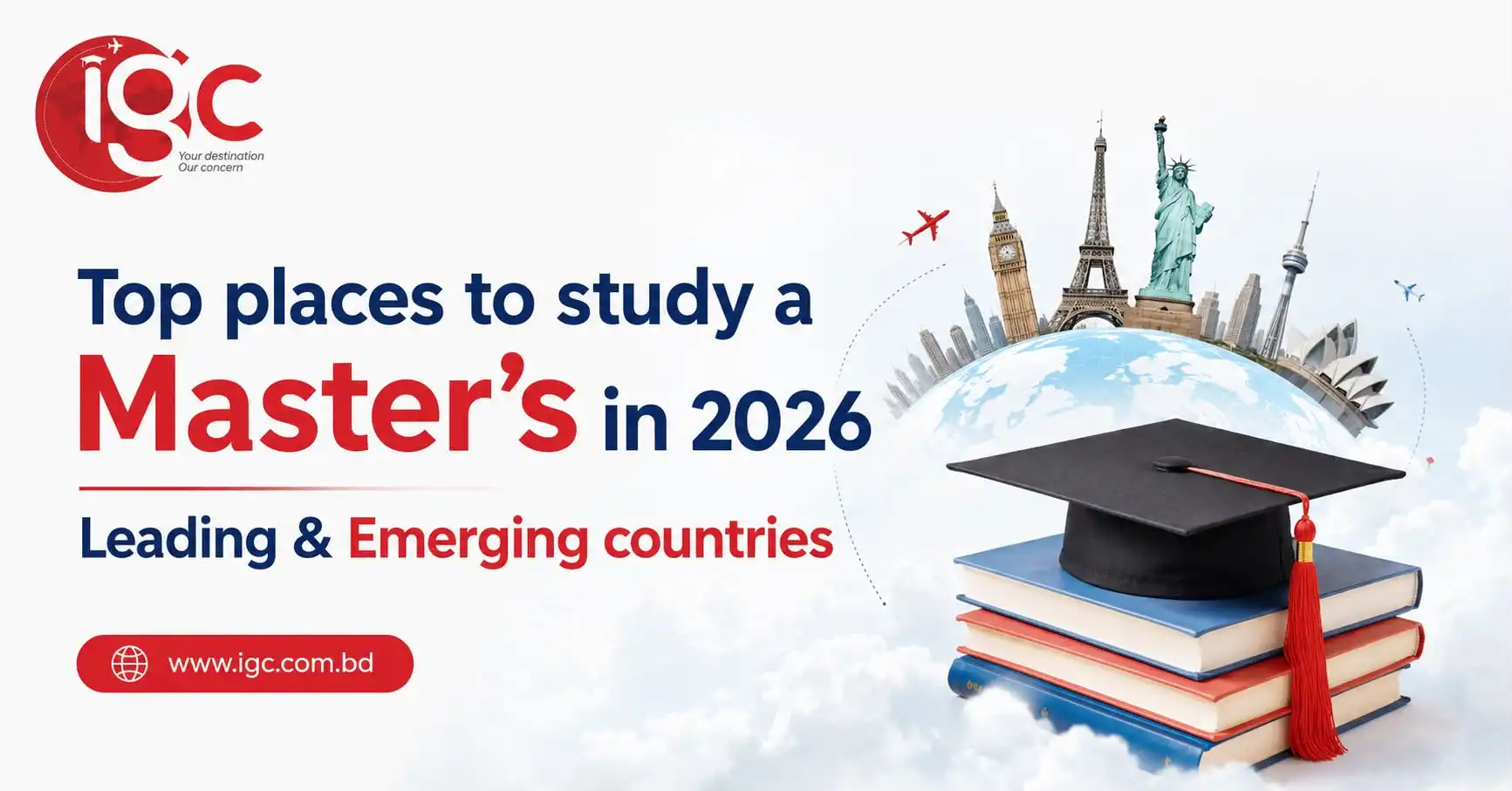
The idea of pursuing higher education abroad has changed a lot in recent years. Today, students are not only thinking about famous destinations but also exploring new and emerging countries. This makes the discussion of Top Places to Study a Master’s in 2026 s very important. The global education system is becoming more open, more connected, and more competitive.
In recent years, countries like Canada, Australia, and United Kingdom have remained popular. At the same time, new destinations like Malaysia, Hungary, and Poland are gaining attention. These emerging countries offer affordable tuition, flexible visa options, and growing job markets.
This article explores Top Places to Study a Master’s in 2026: Leading and Emerging Countries in detail. It will guide students step by step. It will also include real-life style stories of Bangladeshi students who successfully managed their study journey. The goal is simple. To help you choose wisely and plan realistically.
Choosing the right country is not just about ranking. It is about your life, your career, and your future.
For example, Rahim from Dhaka wanted to study data science. He first thought about the United States. But after research, he chose Canada because of easier PR options and lower cost. Today, he works part-time and studies comfortably.
Key reasons why country selection matters:
So, understanding Top Places to Study a Master’s in 2026: Leading and Emerging Countries is not optional. It is necessary.
Leading Countries for Master’s Studies in 2026
Canada remains one of the top destinations.
A Bangladeshi student named Nusrat chose Canada for her MBA. She worked part-time in a retail store and later secured a job in marketing.
Challenges:
Australia is known for strong education and good weather.
Advantages:
Many Bangladeshi students prefer Australia because of English-speaking culture.
Example:
Tanvir from Chattogram studied IT in Australia. He faced initial struggles with rent but later shared accommodation to reduce cost.
United Kingdom offers one-year master’s programs.
Benefits:
However, cost can be high.
A student named Farzana completed her MSc in one year and started working immediately after.
United States is still a dream destination.
Pros:
Cons:
Malaysia is becoming popular among Bangladeshi students.
Why?
Example:
Imran from Sylhet chose Malaysia due to budget limits. He completed his degree without financial stress.
Hungary offers the famous Stipendium Hungaricum scholarship.
Benefits:
Many Bangladeshi students apply every year.
Poland is another emerging destination.
Advantages:
Germany offers free or low-cost education.
However:
Still, it is one of the best choices for engineering students.
When evaluating Top Places to Study a Master’s in 2026: Leading and Emerging Countries, consider:
1. Cost
2. Work Opportunities
3. Language
4. Immigration Path
Common Challenges for Bangladeshi Students
Many students face real difficulties.
Many families cannot afford high tuition.
Solution:
Moving abroad can feel lonely.
Example:
A student in Australia struggled initially but joined a Bangladeshi student group and adapted.
Advice:
Prepare strong documents
Show clear study plan
Start preparation early
Improve English skills
Save money step by step
Choose country based on your goal
When we continue the discussion of Top Places to Study a Master’s in 2026: Leading and Emerging Countries, it becomes very clear that the benefits for Bangladeshi students are not only academic. They are personal, professional, and long-term. Many students from Bangladesh who study abroad experience a complete transformation in their thinking, lifestyle, and career direction.
Let us explore these benefits in a detailed and practical way.
One of the biggest advantages is access to advanced education systems. Countries like Canada, United Kingdom, and Australia offer updated curriculum, modern labs, and research-based teaching.
In Bangladesh, many universities still follow traditional teaching methods. But abroad, students learn through:
For example, Rifat from Rajshahi studied Business Analytics in United Kingdom. He shared that instead of memorizing theories, he worked on real company data. This helped him build practical skills that are valued globally.
Another major benefit is better job opportunities. Many countries now offer post-study work visas.
For example:
This means students can gain international work experience.
A Bangladeshi student named Sadiya completed her Master’s in IT in Australia. After graduation, she got a job as a junior developer. Within two years, her salary was much higher than what she could expect in Bangladesh.
3. Opportunity to Earn While Studying
Many Bangladeshi students worry about financial pressure. But most countries allow part-time work.
Typical work rights:
Students often work in:
Example:
Hasan from Cumilla went to Canada. He worked in a grocery store part-time. This helped him cover his daily expenses and reduce pressure on his family.
This earning opportunity is a major benefit, especially for middle-class Bangladeshi families.
Studying abroad means meeting people from different countries. This builds confidence and communication skills.
Students learn:
For example, in Malaysia, Bangladeshi students often meet peers from Indonesia, Nigeria, China, and the Middle East. This creates a global mindset. At first, many students feel shy. But over time, they become more confident and independent.
For many Bangladeshi students, English is a second language. Studying abroad helps improve fluency naturally.
Daily activities like:
Help students become comfortable in English. A student named Jannat, who studied in Canada, said that she was nervous in the beginning. But after six months, she could present confidently in class. This improvement is very valuable for future careers.
One important reason many students choose countries from the Top Places to Study a Master’s in 2026: Leading and Emerging Countries is immigration opportunity.
Countries like:
offer pathways to Permanent Residency (PR).
This gives long-term security and career stability.
However, students should plan carefully. PR rules change often. It is important to choose the right course and location.
Living abroad teaches life skills that cannot be learned in classrooms.
Students learn how to:
For example, Arif from Bogura moved to Poland. In the beginning, he struggled with cooking and budgeting. But within a few months, he became fully independent.
This growth builds confidence for life.
8. Access to Scholarships and Financial Support
Many students think studying abroad is impossible due to cost. But there are many scholarships available.
Examples:
These options make education accessible even for students with limited budgets.
A real example is Mehedi from Khulna. He received a scholarship in Hungary. His tuition, accommodation, and monthly expenses were covered. This changed his life completely.
Students who are interested in research get strong support abroad.
Facilities include:
Countries like Germany and United States are leaders in research.
This helps students build strong academic profiles.
Degrees from international universities are recognized globally.
This means:
Even if students return to Bangladesh, they often get better jobs in multinational companies.
When we deeply analyze the Top Places to Study a Master’s, it becomes clear that the benefits go far beyond education. For Bangladeshi students, it is a life-changing journey.
Yes, there are challenges like cost, culture shock, and visa stress. But with proper planning and determination, the benefits are much greater.
The key is to choose wisely, prepare early, and stay focused on long-term goals.
The journey of choosing the Top Places to Study a Master’s in 2026: Leading and Emerging Countries requires careful thinking. Both leading and emerging countries offer unique benefits. The right choice depends on your budget, career goal, and comfort level. Bangladeshi students can succeed with proper planning, smart decisions, and strong determination.
1. Which country is cheapest for Bangladeshi students?
Countries like Malaysia and Poland are cheaper. Tuition and living costs are manageable.
2. Is studying in Canada worth it?
Yes. It offers work opportunities and PR options.
3. Can I study abroad with low budget?
Yes. Choose emerging countries or apply for scholarships.
4. Which country gives PR easily?
Canada and Australia have better PR pathways.
5. Is IELTS mandatory?
Mostly yes. Some universities accept alternatives.
6. How much money do I need?
It depends on the country. It can range from 8 to 25 lakh BDT per year.
7. Can I work while studying?
Yes. Most countries allow part-time work.
8. Which country is best for IT students?
USA, Canada, and Germany are strong choices.
9. Are scholarships available?
Yes. Hungary and Germany offer many options.
10. How long does a master’s degree take?
Usually 1 to 2 years.
11. Is living abroad difficult?
At first yes. But students adjust with time.
12. Can I take my family?
Some countries allow dependents.
13. What are visa rejection reasons?
Weak financial proof or unclear study plan.
14. Which country is safest?
Canada and Australia are considered safe.
15. Should I choose ranking or cost?
Balance both. Do not focus only on ranking.